The Simple Marketing Funnel Every Myanmar Startup Needs Before Running Ads
 By
By
You Have a Budget. You Do Not Have a Strategy. Here Is Why That Matters.
Let me describe a situation that is more common than it should be among Myanmar startups in 2026. A founder , let us call him Kyaw , has built a decent product. A food delivery service, a fashion brand, a tutoring business, a wellness service. Something real, something that works, something that people who have tried it genuinely like. He has some initial customers who came through word of mouth and personal referrals. And now, with a bit of capital behind him, he is ready to grow. He has a Facebook Ads budget of 300,000 kyat per month, a boosted post or two already running, and an expectation that the customers are about to start flowing in.
Three months later, Kyaw has spent nearly a million kyat on advertising. His posts have been seen by tens of thousands of people. His page likes have increased. His boosted videos have racked up impressive view counts. But his actual customer base has grown by fewer than twenty people. His cost per new customer , if he sat down and calculated it honestly , would be eye-watering. He is confused, frustrated, and starting to wonder whether digital advertising actually works or whether it is, as a few of his business owner friends have suggested, a scam.
It is not a scam. But Kyaw made the most expensive mistake in digital marketing: he ran ads into a bucket with holes in it. He had the traffic. What he did not have was a system to catch it, warm it up, and convert it into customers. He had advertising without a funnel. And advertising without a funnel is, as I have said to dozens of founders in exactly this situation, a very efficient way to give your money to Meta without anything meaningful coming back.
This post is for the founder who has a budget and is ready to advertise , but has not yet built the foundation that makes advertising actually work. We are going to cover what a marketing funnel actually is (not the jargon version , the real version), why Myanmar startups specifically need one before they run a single ad, and how to build a simple but complete funnel in two weeks without a large team or a complicated technology stack.
By the end of this post, you will have a clear picture of exactly what needs to be in place before you spend your first baht or kyat on paid advertising , and a practical plan for building it. Let us get into it.
Part 1: What a Marketing Funnel Actually Is , The Real Explanation
The word 'funnel' gets used so often in marketing that it has become almost meaningless. Let me give you the real explanation, stripped of jargon, because understanding it properly changes how you think about every marketing decision you make from this point forward.
A marketing funnel is simply a description of the journey a stranger takes to become a customer. It is called a funnel because the number of people at each stage gets smaller as you move toward a sale , many people might discover you, fewer will consider you seriously, and fewer still will actually buy. That narrowing is not a failure. It is the normal, expected shape of any sales process, in any industry, anywhere in the world.
The reason the funnel matters is this: most advertising only reaches people at the very top , the discovery stage. But most buying decisions happen at the bottom , after consideration, research, comparison, and trust-building. The funnel is the structure that moves people from the top to the bottom. Without it, you pour people into the top and they immediately fall out the sides, because there is nothing to catch them, guide them, or warm them up.
The three stages every funnel needs
Every marketing funnel, regardless of business type or size, has three core stages. The names vary depending on who is explaining it, but the logic is always the same.
- Awareness , people discover that you exist.
This is the top of the funnel. It is where a stranger first encounters your brand , through a Facebook post, a TikTok video, a Google search result, a recommendation from a friend, or a billboard they pass on the way to work. At this stage, they know nothing about you except whatever impression that first encounter created. Your job at the awareness stage is not to sell , it is to be interesting or useful enough that they want to learn more.
- Consideration , people evaluate whether you are the right choice.
This is the middle of the funnel, and it is the most neglected stage in Myanmar startup marketing. After discovering you, a potential customer enters a research phase. They look at your profile, read your content, compare you to alternatives, look for social proof (reviews, testimonials, case studies), and assess whether they trust you enough to buy. This stage can last hours, days, weeks, or even months depending on the size and complexity of the purchase. Your job at the consideration stage is to make it easy for them to find the information they need and to consistently reinforce that you are the right choice.
- Decision , people take action and become customers.
This is the bottom of the funnel. The potential customer has done their research, built enough trust, and is ready to buy. Your job at the decision stage is to make that buying action as easy and frictionless as possible , a clear call to action, a simple purchase or booking process, a fast response time, and ideally a nudge that creates a reason to act now rather than later.
Why most Myanmar startups skip the middle
Here is the pattern I see repeatedly with Myanmar startup marketing: founders invest heavily in the awareness stage (Facebook posts, boosted content, TikTok videos) and then build their decision stage infrastructure (a contact number, a price list, a Messenger link). But they build nothing for the consideration stage in between. There is no website with detailed information. No FAQ that addresses the questions buyers ask before deciding. No email sequence that builds trust over time. No testimonials that provide social proof. No content that helps a researcher understand why you are different from the alternatives.
The result is exactly what happened to Kyaw: ads generate awareness, some of those aware people become genuinely interested, but when they enter the consideration stage and go looking for more information, there is nothing there. The bucket has no middle. The top feeds straight to the bottom, and most people fall out before they reach it.
For a broader picture of how the Myanmar digital landscape shapes buyer behaviour at each funnel stage, the Landscape of Digital Marketing in Myanmar 2026 post covers how platform fragmentation between Facebook, TikTok, Telegram, and Google affects the consideration stage specifically.
Part 2: Why Ads Without a Funnel Is a Donation to Meta
I want to spend a little time on the mindset shift here, because I think it is the most important thing in this entire post. The way most founders think about advertising is fundamentally backwards , and until that thinking changes, no amount of budget will produce the results they are looking for.
The common mental model: ads create customers
Most founders think of advertising as a machine that takes money in one side and produces customers out the other. You spend 100,000 kyat on Facebook Ads, the ad reaches 50,000 people, some of those people buy your product. More spend equals more customers. The ad is the thing that does the work. This mental model is not entirely wrong , but it is dangerously incomplete, and it leads directly to the situation Kyaw found himself in.
The accurate mental model: ads create awareness, funnels create customers
The more accurate way to think about advertising is this: ads create awareness. They put your brand in front of people who did not know you existed. That is all they do. The work of turning that awareness into consideration, and that consideration into a buying decision, is done by your funnel , your website, your content, your email sequences, your social proof, your follow-up system. Ads are the top of the funnel. Everything else is the funnel itself.
When you run ads without a funnel, you are paying to generate awareness for a journey that has no path forward. People see your ad, they might be interested, they look for more information , and find nothing organised, nothing trustworthy, nothing that answers their questions or gives them a reason to move forward. So they do not. They scroll on. They find your competitor who has a proper website and a clear value proposition and a free guide they can download. And they buy from them instead.
The leaky bucket problem
Imagine your marketing system is a bucket. Ads pour water in at the top. Your funnel holds the water and delivers it to the bottom as customers. A bucket with holes , no website, no consideration-stage content, no follow-up system , loses most of the water before it reaches the bottom. Pouring more water in (spending more on ads) does not fix the holes. It just accelerates the loss.
This is why I always say: fix the bucket before you turn on the tap. Build your funnel before you run your ads. Not because ads are bad , they are a powerful growth tool when used correctly , but because an ad campaign running into a complete funnel generates compounding returns, while an ad campaign running into an empty space generates compounding regret.
Research from WordStream's Facebook Advertising Benchmarks consistently shows that the average conversion rate from Facebook Ads across industries is between 2% and 5% when a proper landing page and follow-up system is in place. Without these elements, conversion rates typically drop below 0.5%. That difference , between a 3% and a 0.3% conversion rate , means you need ten times the ad spend to achieve the same number of customers. Building the funnel is not optional preparation for advertising. It is the thing that makes advertising economically viable.
Part 3: The Myanmar Startup Funnel , What Each Stage Needs
Now let us get practical. What does each stage of a Myanmar startup funnel actually need? I am going to walk through this with specific, actionable components , not general principles, but the actual pieces you need to build, why each one matters, and what it looks like in practice.
Stage 1 , Awareness: What you need to attract the right people
The awareness stage is about one thing: reaching the people who are most likely to become your customers, and making a first impression strong enough that they want to learn more. For most Myanmar startups, awareness comes from a combination of organic and paid channels.
What you need at the awareness stage:
- A clear, specific value proposition. Before you run a single ad, you need to be able to answer one question in one sentence: who is your product for, and what specific problem does it solve? Not 'we sell healthy food' but 'we deliver traditional Myanmar meals to expat families in Bangkok who miss home cooking.' Specificity is the engine of awareness-stage content. The more precisely you define your audience, the more your content resonates with exactly the right people.
- Platform-specific awareness content. Different platforms serve awareness differently. Facebook and TikTok are discovery platforms , people are not looking for you, they encounter you in their feed. Instagram serves visual discovery. Google Search serves intent-based discovery , people actively searching for what you offer. Your awareness content needs to match the platform. A TikTok video that hooks a viewer in the first two seconds with a relatable problem. A Facebook post that tells a story your target audience immediately recognises. A Google Ad that appears when someone searches the exact problem your product solves.
- A clear next step. Every awareness touchpoint needs to direct people somewhere. Not to your Messenger inbox , to a specific destination that begins the consideration journey. A landing page. A free guide. A blog post that answers the question your ad raised. Without a clear next step, awareness evaporates. The person was interested for ten seconds and then scrolled past, and you have nothing to show for it.
Stage 2 , Consideration: What you need to build trust and answer questions
This is the stage that most Myanmar startups are missing entirely, and it is the stage that does the most work in converting interested people into buyers. The consideration stage is where a potential customer goes from 'this looks interesting' to 'I trust this enough to buy.' That journey requires information, social proof, and time.
What you need at the consideration stage:
- A website that answers the real questions. Not a brochure website , a buyer-journey website. A site where someone who is considering your product can find: what exactly you offer and what it costs, how it works step by step, who it is for and who it is not for, what makes you different from the alternatives, and what other customers have said about their experience. These are the questions buyers are asking during the consideration stage. If your website does not answer them, buyers will look elsewhere , or simply decide not to buy.
- A lead magnet that captures email addresses. A lead magnet is a free piece of value , a guide, a checklist, a tool, a mini-course , that a potential customer receives in exchange for their email address. It serves two purposes simultaneously: it delivers genuine value that builds trust, and it captures contact information that allows you to continue the conversation via email even if the person does not buy immediately. The best lead magnets address the most common question or concern your buyers have before deciding to purchase.
- An email nurture sequence. Once you have someone's email address, you have the ability to continue educating and warming them up over time , automatically. A nurture sequence is a series of pre-written emails that go out on a schedule after someone downloads your lead magnet or signs up for your list. Each email delivers a piece of value: a useful insight, a customer story, an answer to a common objection, an explanation of how your product works. Over the course of five to ten emails, a subscriber moves from mildly interested to genuinely warm , and arrives at the decision stage already half-sold.
- Social proof. Testimonials, reviews, before-and-after results, case studies, and user-generated content are not decorative additions to your marketing , they are essential consideration-stage infrastructure. Myanmar consumers, like consumers everywhere, trust the experiences of other buyers far more than they trust the claims of brands. Three genuine, specific testimonials on your website do more to move someone from consideration to decision than almost any other single element.
Stage 3 , Decision: What you need to close without pressure
By the time a potential customer reaches the decision stage, they already want to buy. Your job here is not to convince them , the funnel has done that work. Your job is to make the act of buying as easy, clear, and frictionless as possible, and to remove any last doubts or obstacles that might cause them to hesitate.
What you need at the decision stage:
- A clear, single call to action. Decision-stage pages should have one primary action: book a consultation, start a free trial, place an order, fill in this form. The more options you give a buyer at the decision stage, the more likely they are to choose none of them. Remove distractions, reduce choices, and make the next step unmistakably clear.
- Fast, warm response. At the decision stage, speed of response is critical. A buyer who has worked through your funnel, downloaded your guide, read your emails, and is now filling in your contact form is at peak interest. The longer they wait for a response, the more that interest cools. Automated confirmation emails, meeting schedulers that allow instant booking, and a commitment to responding to all decision-stage inquiries within two hours are the difference between closing and losing.
- A reason to act now. Without a reason to act today rather than tomorrow, most buyers at the decision stage will say 'I will do this later' , and later often never comes. A time-limited offer, a limited availability signal, a bonus for acting within a specific window, or simply a compelling story about what changes when they start , any of these creates the gentle urgency that moves a warm buyer from 'I will do this' to 'I am doing this right now.'
- A post-purchase or post-conversion sequence. The funnel does not end when someone buys , it continues into retention and referral. A post-purchase email sequence that onboards new customers, delivers on the promise of the sale, and creates a natural opening for a review or referral is the final piece of a complete funnel. Customers who feel well-served after buying are your most powerful awareness channel for the next cycle.
Part 4: The Myanmar Startup Funnel , At a Glance
Here is the complete funnel framework laid out clearly, with the specific tools and content types that serve each stage:
|
Stage |
Goal |
Tools & Content |
Success Signal |
|
Awareness |
Reach the right people |
Facebook Ads, TikTok, SEO blog posts, organic social |
Impressions, reach, website clicks |
|
Consideration |
Build trust and answer questions |
Website, lead magnet, email sequence, testimonials, FAQ |
Guide downloads, email open rates, time on site |
|
Decision |
Make buying easy and frictionless |
Landing page, CTA, meeting scheduler, fast response |
Inquiries, bookings, conversion rate |
|
Retention |
Delight and create advocates |
Onboarding emails, check-ins, referral ask |
Repeat purchases, reviews, referrals |
Notice that each stage feeds directly into the next. Awareness without consideration infrastructure is wasted. Consideration without a clear decision-stage path is incomplete. And decision without a retention plan misses the compounding value of turning one-time buyers into long-term advocates.
Part 5: Building Your Funnel in Two Weeks , The Practical Blueprint
Here is the part that most marketing content skips: the actual doing. I am going to give you a concrete, two-week plan for building a minimum viable funnel , the smallest, simplest version of each stage that still functions as a complete system. You do not need a full team, a large budget, or weeks of preparation. You need focused effort on the right things in the right order.
Week 1: Foundation , build your consideration infrastructure
Counterintuitively, we start with the middle, not the top. There is no point building awareness if the consideration stage is not ready to receive it. Building the foundation first ensures that every awareness effort you make from day one has somewhere to land.
- Day 1–2: Define your one-sentence value proposition.
Before anything else, write down in one sentence: who your product is for, what problem it solves, and why you are the right person to solve it. This sentence becomes the foundation of every piece of content you create. Test it with five people who match your target audience. If they immediately understand it and say 'oh, that is exactly what I need,' you have it right. If they look confused or ask clarifying questions, revise it until the clarity is immediate.
- Day 3–4: Build or update your website's key pages.
You do not need a complete website overhaul. You need three pages that work well: a homepage that immediately communicates your value proposition and directs visitors to the right next step, a services or product page that explains what you offer clearly and includes pricing or a clear path to pricing, and a contact or booking page with a simple form and a meeting scheduler. These three pages, done well, are the core of your consideration stage. Add a testimonials section to the homepage. Add an FAQ to the product page. These two additions alone significantly increase the trust signals available to a buyer who is researching.
- Day 5–6: Create your lead magnet.
Your lead magnet should answer the single most common question your potential customers ask before deciding to buy. For a food delivery business: 'A Week of Traditional Myanmar Meals in Bangkok , Sample Menu and Prices.' For a tutoring business: 'The 5 Topics Myanmar Students Most Often Struggle With in Thai Schools.' For a wellness service: 'The Beginner's Guide to [Your Service]: What to Expect in Your First Session.' Write it yourself , you know this material better than anyone. Format it as a clean PDF. One to three pages is enough. Make it genuinely useful, not a disguised sales brochure.
- Day 7: Set up your email capture and first automation.
Add a form to your website where visitors can download the lead magnet in exchange for their email address. Connect this form to an email marketing tool , HubSpot, Mailchimp, or even a simple automation in your existing platform. Set up one automatic email: the delivery email that sends the lead magnet immediately after sign-up, with a warm, personal introduction from you. This single automation , a form connected to an automatic email , is the beginning of your email nurture system.
Week 2: Content and connection , build the awareness and decision layers
- Day 8–9: Write your three-email welcome sequence.
Extend the single delivery email into a three-email welcome sequence. Email one: delivery of the lead magnet plus a brief, genuine introduction to who you are and why you do what you do. Email two (sent three days later): a useful insight or tip related to your area of expertise , something that demonstrates your knowledge and builds trust. Email three (sent seven days after sign-up): a gentle, low-pressure invitation to take the next step , book a consultation, try a sample, start a free trial. Three emails over one week is the minimum viable nurture sequence. It is enough to move a cold lead to warm before the interest fades.
- Day 10–11: Build your decision-stage page.
Create a dedicated page for your primary call to action. If you offer consultations, a booking page with a clear description of what the consultation includes, a meeting scheduler or contact form, and two or three testimonials. If you sell a product, a product page with clear pricing, a prominent buy or order button, delivery information, and a guarantee or returns policy. This page should have no distractions , no navigation links pulling people away, no competing offers. One page, one action, everything on that page designed to support that single action.
- Day 12–13: Create your awareness content plan.
Now , and only now , you are ready to think about awareness content. Plan five pieces of content for the next two weeks: two Facebook posts that tell the story of a specific customer problem and how your product solves it, one TikTok or Reels video that demonstrates your product or service in action, one blog post or detailed Facebook note that answers the most common question your buyers have, and one piece of social proof content , a customer testimonial, a before-and-after, a case study. Each piece of content should direct people to a specific page on your website, not just to your homepage.
- Day 14: Install tracking and review the full funnel.
Before you run a single paid ad, install Google Analytics on your website and Facebook Pixel on your Facebook Page. These two free tools will tell you where your visitors are coming from, which pages they visit, how long they stay, and whether they take action. Without tracking, you are running a funnel blind , you have no way of knowing which part is working and which part needs to be fixed. With tracking, every week you learn something new that makes the funnel better. Review the full funnel from top to bottom: awareness content directs to your website, website directs to your lead magnet, lead magnet triggers the email sequence, email sequence directs to your decision page, decision page directs to your call to action. If you can walk through all five steps without a break in the chain, your funnel is ready.
Part 6: Now You Can Run Ads , And Here Is How to Do It Right
With your funnel in place, you are now ready to use paid advertising effectively. The difference between running ads into a complete funnel versus running them without one is not subtle , it is the difference between an investment that compounds and an expense that evaporates.
Start small and test before scaling
Do not start with your full monthly budget. Start with a test budget , 10% of what you plan to spend monthly , and run two to three different ad variations targeting your most specific, most likely audience. The goal of the first two weeks of advertising is not to generate maximum customers. It is to learn which message resonates, which audience responds, and which ad drives the most qualified website visitors. Only once you have that data should you scale your spend.
Send ads to your funnel, not your homepage
A common mistake even experienced advertisers make is sending all ad traffic to their homepage. Your homepage is designed for visitors who already know something about you , it gives them a broad overview and lets them choose where to go next. Ad traffic is cold , these people know nothing about you and need to be directed immediately to the most relevant, most compelling piece of your funnel. Send awareness ads to your lead magnet landing page. Send retargeting ads (to people who have already visited your site) to your decision-stage page. Match the ad to the stage of the funnel you are targeting.
Use retargeting to reach warm audiences
Once your Facebook Pixel is installed and collecting data, you can run retargeting ads , ads that appear specifically to people who have already visited your website. These are your warmest audiences: people who already know who you are and have expressed enough interest to click through to your site. Retargeting ads consistently convert at three to five times the rate of cold audience ads, at a fraction of the cost. They are the single most efficient use of a small advertising budget, and they only work when you have the Pixel installed and the funnel running.
For AI-powered tools that can help you generate ad copy, email sequences, and content for each stage of your funnel quickly, the Role of AI in Digital Marketing in Myanmar and 10 Prompts post includes specific prompts for writing Facebook ad copy, TikTok scripts, and email sequences tailored to the Myanmar market.
Part 7: The Five Funnel Mistakes Myanmar Startups Make Most Often
Having worked with startups across Myanmar and Southeast Asia on their digital marketing strategy, I have seen the same funnel mistakes come up repeatedly. Here are the five most common, and how to avoid them.
Mistake 1: Building awareness before consideration is ready
Running ads or creating viral content before your website, lead magnet, and email sequence are in place is the most common and most expensive funnel mistake. Awareness without consideration infrastructure is not just wasted , it is actively harmful, because you are training your target audience to associate your brand with an incomplete, unimpressive experience. Build the consideration stage first. Always.
Mistake 2: Using your Messenger inbox as your CRM
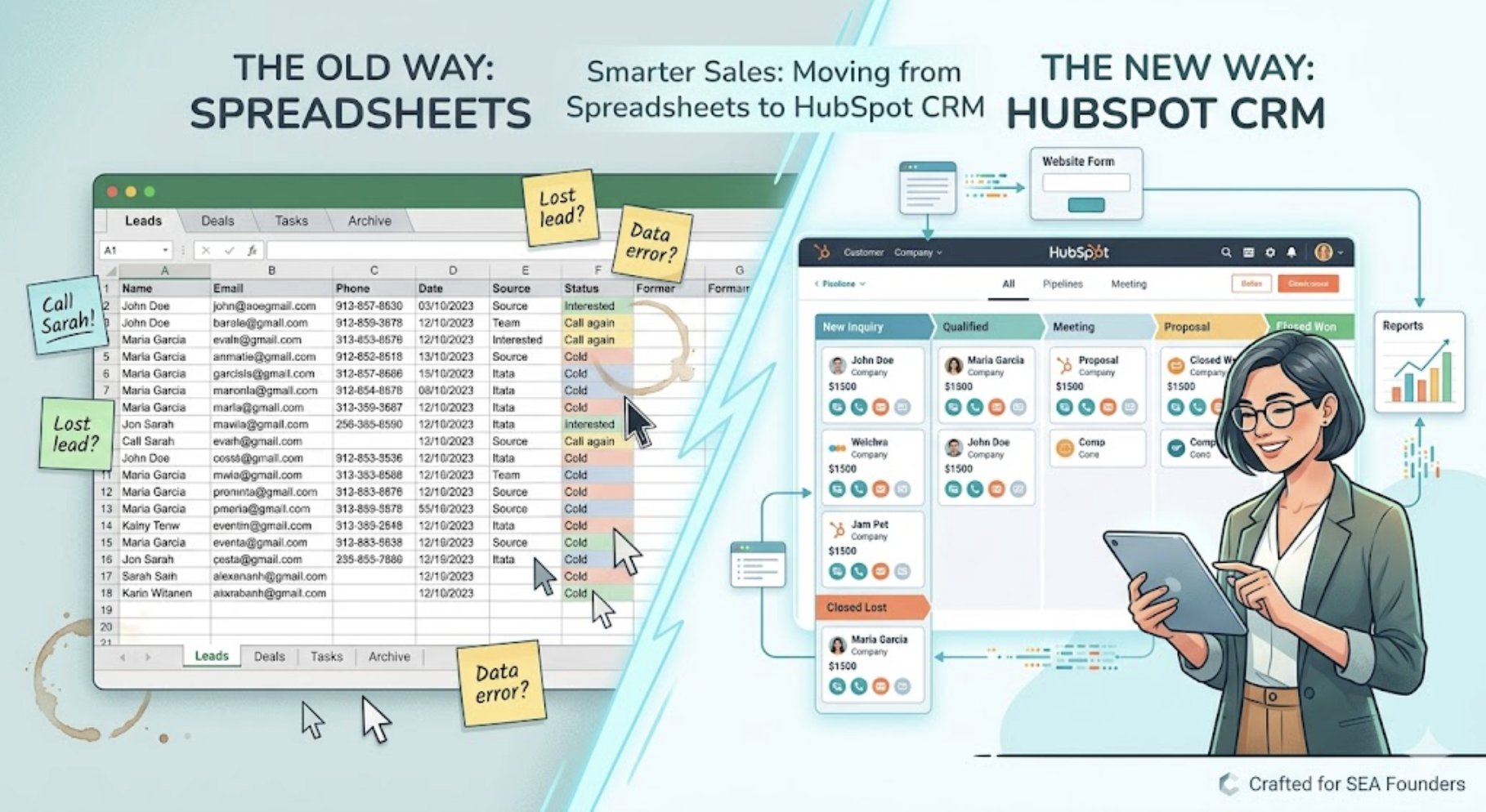
Facebook Messenger is a communication tool, not a customer management system. When your pipeline lives in Messenger threads, you have no visibility into your overall lead flow, no way to systematically follow up, no ability to segment by interest or stage, and no record that survives a phone change or a team member leaving. Move your leads into a structured system , even a basic spreadsheet , from the moment they enter your funnel. A HubSpot free account is better still.
Mistake 3: Making the lead magnet a sales document
A lead magnet that is essentially a product brochure in disguise does not build trust , it destroys it. Buyers download lead magnets in exchange for their email address because they expect genuine value. If what they receive is a glorified sales pitch, they unsubscribe immediately and leave with a negative impression of your brand. Your lead magnet should deliver real, useful information that helps the reader , even if they never buy from you. Trust that the value you deliver will create a preference for your business when the time comes to buy.
Mistake 4: Treating all funnel stages with the same message
An awareness-stage message and a decision-stage message should be completely different. Awareness messages are broad, story-based, and designed to create curiosity or recognition. Decision messages are specific, benefit-focused, and designed to remove the last objection and create urgency. Many Myanmar startups use the same product-focused, price-announcing content for every stage , which is perfect for the 5% of their audience who are already ready to buy, and completely ineffective for the 95% who are still in the awareness or consideration stage.
Mistake 5: Optimising for vanity metrics instead of funnel metrics
Page likes, post views, and follower counts are not funnel metrics. They are signals of awareness at best. The metrics that actually tell you whether your funnel is working are: lead magnet download rate (what percentage of website visitors download your guide), email sequence open and click rates (are your nurture emails being read and acted on), lead-to-meeting conversion rate (what percentage of leads book a consultation), and meeting-to-customer conversion rate (what percentage of consultations result in a sale). These are the numbers that tell you where your funnel is working and where it is leaking.
Part 8: The Myanmar Funnel Readiness Checklist
Before you run your first paid ad, use this checklist to confirm that your funnel is ready. You should be able to check every item in the Foundation and Growth sections before launching an ad campaign.
Foundation , must have before running any ads:
- A clear one-sentence value proposition written down and tested with real potential customers
- A website with at minimum a homepage, a product or service page, and a contact or booking page
- At least two to three genuine customer testimonials displayed on your website
- A lead magnet that delivers genuine value in exchange for an email address
- A welcome email (minimum) or three-email sequence that delivers the lead magnet and begins nurturing
- A decision-stage page with a single, clear call to action
- Google Analytics installed and confirmed firing on your website
- Facebook Pixel installed and confirmed firing on your website
Growth , should have within the first month of advertising:
- A full five-email nurture sequence with a clear call to action in the final email
- A CRM or structured spreadsheet tracking every lead and their current funnel stage
- A retargeting audience built from website visitors (requires Pixel to have collected at least 100 visitors)
- A weekly review of your funnel metrics: downloads, open rates, conversion rate, cost per lead
For a practical guide to the tools , both free and paid , that Myanmar and SEA founders use to build and manage each layer of this funnel, the Tools for Digital Marketers in Myanmar post is a detailed, practical resource covering the full digital stack from tracking to email automation.
Conclusion: Build the System, Then Turn On the Traffic
Let us go back to Kyaw. After his difficult first three months of advertising without a funnel, he did something that many founders in his position do not do: he stopped spending and started building. He spent two weeks building his consideration infrastructure , a proper website, a lead magnet, a three-email welcome sequence, and a structured way to track his leads. Then, and only then, he restarted his advertising. Same audience. Similar budget. Completely different results.
The difference was not the ad creative, the targeting, or the budget. It was that this time, the ads were driving people into a system that was designed to receive them, warm them up, and guide them toward a decision. The bucket no longer had holes. And the water , every baht of ad spend , started actually filling it.
This is the fundamental principle behind everything in this post: advertising is an accelerant, not a foundation. It makes a working funnel work faster. It makes a broken funnel fail faster. Before you spend a single baht on paid traffic, ask yourself honestly: if a hundred interested people landed on my website right now, what would happen to them? Would they find the information they need to build trust? Would they have a way to give me their contact details without committing to a purchase? Would they receive a follow-up that keeps the conversation warm? And would they eventually be guided to a clear, easy path to becoming my customer?
If the answer to any of those questions is no, the two weeks of work in this post is your most important marketing investment right now. Not the next ad campaign. Not more content. Not a bigger budget. The funnel.
Build it well. Then turn on the traffic. And watch what happens when a well-designed system meets a well-targeted audience.